
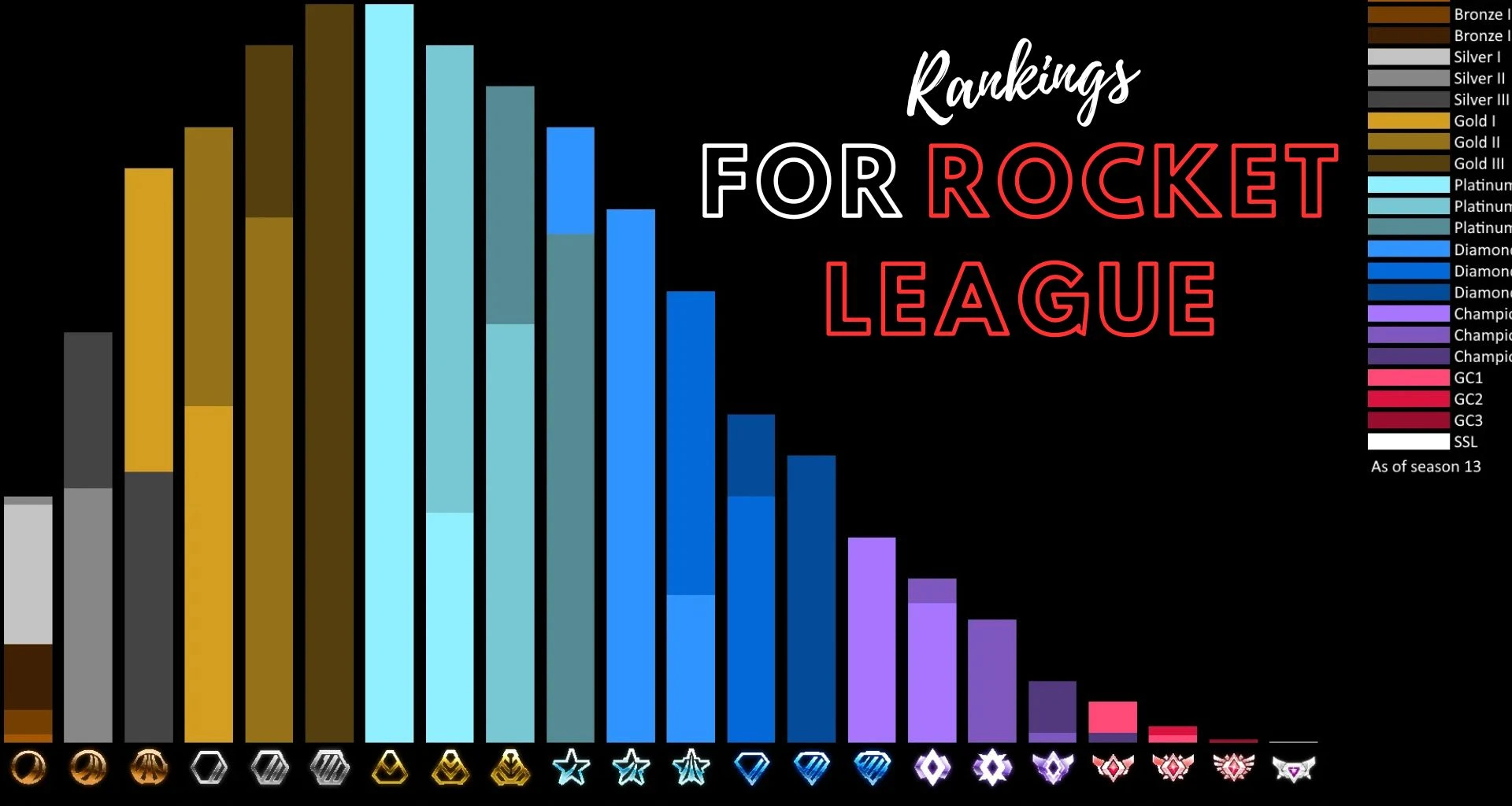
Understanding the rankings for Rocket League is essential for tracking your progress, improving your gameplay, and competing against players of similar skill levels. Rocket League features a structured competitive ranking system that ranges from Bronze to Supersonic Legend, with each rank representing a different level of mastery. Players can monitor their rank progression through in-game competitive playlists and third-party tracking platforms that provide detailed statistics, leaderboards, and performance insights. This guide explains how the ranking system works, where to check your current skill rating, the best ranking trackers available, and practical tips to help you climb the ladder faster.
- What Are the Rankings for Rocket League?
- Understanding Divisions
- How Rocket League Ranking Works
- What Is the Average Rank in Rocket League?
- Skills Needed for Each Rank
- Best Platforms for Tracking Rocket League Rankings
- Official Leaderboards and Competitive Rankings
- Checking Your Current Skill Rating
- Tips to Rank Up Faster
- Recent Competitive Ranking Updates
- Conclusion
- Frequently Asked Questions
What Are the Rankings for Rocket League?
Rocket League’s competitive mode is built around a skill-based ranking system designed to match players against opponents of comparable ability. The rankings for Rocket League help determine a player’s overall skill level and progression throughout each competitive season.
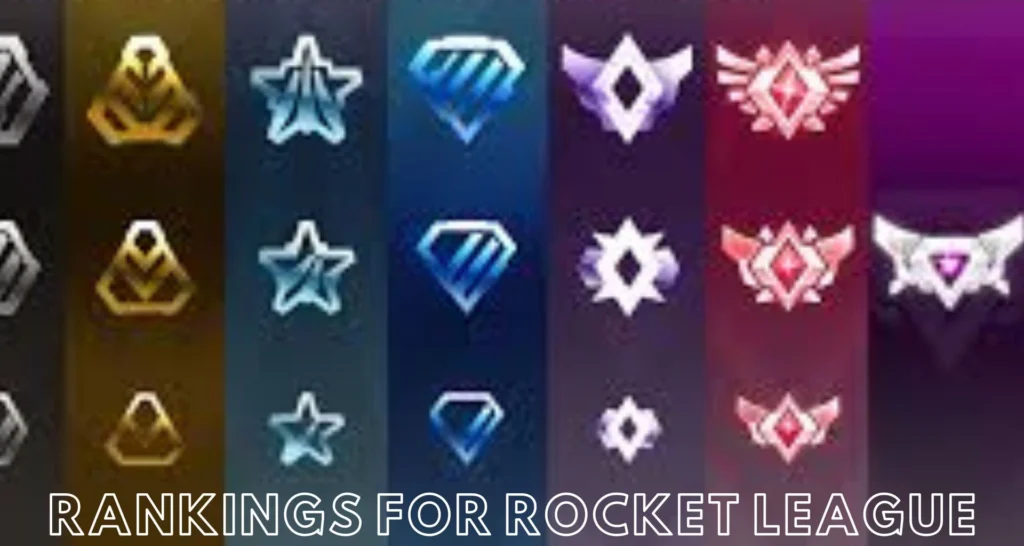
The rank hierarchy starts with Unranked and progresses through Bronze, Silver, Gold, Platinum, Diamond, Champion, Grand Champion, and finally Supersonic Legend. Most ranks are divided into three tiers and four divisions, creating a detailed progression path that rewards consistent performance.
These rankings are available across multiple competitive playlists, including 1v1 Duel, 2v2 Doubles, 3v3 Standard, and various extra modes. Because each playlist has its own rating, players may hold different ranks depending on the game mode they play.
For many players, the rankings for Rocket League serve as the primary measure of improvement. Climbing from one rank to another often reflects increased mechanical skill, game awareness, teamwork, and consistency.
Understanding Divisions
Each rank, with the exception of Supersonic Legend, is divided into four divisions. These divisions act as smaller progression checkpoints within a rank tier.
For example, a player at Diamond II Division I will need to gain additional rating points before advancing to Diamond II Division II. Continued success eventually leads to Diamond III and beyond. Losing matches can cause players to drop divisions or even demote to a lower rank.
The division system helps smooth progression and prevents abrupt changes in rank after only a few games. It also gives players a clearer sense of advancement as they work toward their next milestone.
Because the rankings for Rocket League are tied to hidden rating values, divisions serve as a visible representation of a player’s current standing within a rank.
How Rocket League Ranking Works
Rocket League uses a Matchmaking Rating (MMR) system to determine player skill. Although MMR is largely hidden within the game itself, it forms the foundation of the rankings for Rocket League.
Every competitive match affects your MMR. Wins generally increase your rating, while losses decrease it. The amount gained or lost depends on several factors, including your current rating and the rating of your opponents.
At the beginning of each season, players complete placement matches that help determine their starting rank. Returning players typically begin near their previous season’s rating, while new players establish their initial rank through placement games.
Many players prefer tracking their exact MMR using third-party services because the game only displays ranks and divisions. Monitoring MMR can provide deeper insights into progression and reveal how close you are to promotion or demotion.
What Is the Average Rank in Rocket League?
The average player typically falls between Gold and Diamond ranks, depending on the playlist and season. Gold players usually possess a basic understanding of rotations and positioning, while Diamond players demonstrate greater consistency and stronger mechanical skills.
Higher ranks become increasingly exclusive. Champion players represent a relatively small portion of the player base, while Grand Champion and Supersonic Legend are reserved for highly skilled competitors.
Understanding rank distribution can help set realistic expectations. Many players become discouraged when they are not progressing quickly, but even reaching Platinum or Diamond places them above a significant percentage of competitors.
The rankings for Rocket League are designed to create balanced matchmaking rather than simply reward playtime. As a result, improving rank requires measurable skill development.
Skills Needed for Each Rank
Bronze and Silver
Players in Bronze and Silver are typically learning the fundamentals. Key areas of focus include:
- Basic car control
- Consistent ball contact
- Understanding boost management
- Simple defensive positioning
- Learning how rotations work
Gold and Platinum
At these ranks, players begin developing more advanced game sense:
- Improved aerial control
- Better shooting accuracy
- Faster recoveries
- Stronger rotational awareness
- More effective teamwork
Diamond
Diamond players are generally more consistent and mechanically capable:
- Reliable aerial plays
- Defensive reads
- Effective challenge timing
- Better boost pathing
- Increased game speed
Champion
Champion-level players demonstrate advanced knowledge and execution:
- Fast aerials
- Advanced rotations
- Controlled dribbling
- Air dribbles
- Consistent decision-making
Grand Champion and SSL
The highest levels demand excellence in nearly every area:
- Elite mechanics
- Rapid decision-making
- Strong team coordination
- Exceptional positioning
- Consistent execution under pressure
Best Platforms for Tracking Rocket League Rankings
Many players use third-party tracking websites to gain deeper insights into the rankings for Rocket League. These platforms often provide information unavailable within the game itself.
Popular tracking resources include Rocket League Tracker, RLStats, Ballchasing, and various esports analytics websites. These tools allow players to monitor MMR changes, historical rank progression, win rates, leaderboard positions, and seasonal performance trends.
Some services even offer mobile apps that make it easy to compare rankings with friends, monitor team performance, and receive updates whenever your rank changes.
For competitive players, these platforms provide valuable data that can highlight strengths, weaknesses, and areas requiring improvement.
Official Leaderboards and Competitive Rankings
Players interested in the highest levels of competition can view official Rocket League leaderboards through the game and Rocket League’s competitive ecosystem.
Leaderboards showcase top-ranked players across various playlists and regions. They provide insight into the skill level required to reach Grand Champion and Supersonic Legend while also helping aspiring competitors track professional and semi-professional players.
Esports-focused websites further expand on leaderboard information by offering detailed player statistics, team rankings, tournament results, and performance analytics.
Checking Your Current Skill Rating
While Rocket League displays ranks and divisions directly in-game, players often want more detailed information about their exact skill rating.
Third-party tracking services can reveal estimated MMR values, recent rating changes, promotion thresholds, and historical rank charts. This information helps players understand whether they are making meaningful progress even when visible rank changes occur slowly.
Regularly reviewing your rating data can also identify performance patterns, such as specific playlists where you perform better or periods when your gameplay improves most significantly.
Tips to Rank Up Faster
1. Focus on Rotation
Positioning and rotation remain among the most important skills in Rocket League. Many players lose games due to poor positioning rather than mechanical mistakes.
2. Practice Consistently
Short daily training sessions are often more effective than occasional marathon practice sessions.
3. Review Replays
Analyzing your own mistakes can accelerate improvement and reveal habits that limit progression.
4. Improve Recovery Mechanics
Quick recoveries help maintain pressure and improve overall efficiency during matches.
5. Play With Consistent Teammates
Communication and familiarity can significantly improve results in team-based playlists.
6. Prioritize Decision-Making
Many players focus too heavily on mechanics while ignoring game sense. Smart decisions often outperform flashy plays.
7. Manage Tilt
Maintaining composure during losing streaks can prevent unnecessary rating losses and improve long-term consistency.
Recent Competitive Ranking Updates
Rocket League’s ranking system continues to evolve as developers refine matchmaking and competitive balance. Seasonal adjustments, rank recalibrations, and improvements to placement matches help ensure that players are matched appropriately according to their skill level.
These updates aim to improve competitive integrity and provide a more accurate representation of player ability across all playlists.
Conclusion
The rankings for Rocket League provide players with a structured path for measuring improvement and competing at increasingly higher skill levels. From Bronze to Supersonic Legend, every rank represents a unique stage in a player’s development.
By understanding how the ranking system works, using trusted tracking platforms, monitoring skill ratings, studying leaderboards, and applying effective improvement strategies, players can steadily climb the competitive ladder. Whether your goal is reaching Diamond, Champion, or eventually Supersonic Legend, consistent practice and smart decision-making remain the most reliable paths to success.
Frequently Asked Questions
1. What is the highest rank in Rocket League?
The highest rank in Rocket League is Supersonic Legend (SSL). This elite rank is reserved for the top players in the game and requires exceptional mechanics, game sense, consistency, and teamwork. Only a small percentage of the player base reaches this level each season.
2. How can I check my Rocket League MMR and rank progression?
You can view your current rank directly in Rocket League’s Competitive menu. For more detailed information such as MMR, rank history, win rates, and seasonal progress, many players use third-party tracking websites that provide in-depth statistics and ranking insights.
3. What is considered a good rank in Rocket League?
A good rank depends on your goals and experience level. Generally, reaching Platinum or Diamond indicates above-average skill and a solid understanding of game mechanics and rotations. Players who achieve Champion rank or higher are considered highly skilled competitors.
4. What is the fastest way to improve and climb Rocket League ranks?
The fastest way to climb the rankings for Rocket League is to focus on core fundamentals such as rotations, positioning, boost management, and consistency. Regular practice, replay analysis, and playing with reliable teammates can significantly improve your chances of ranking up faster.